 Rehman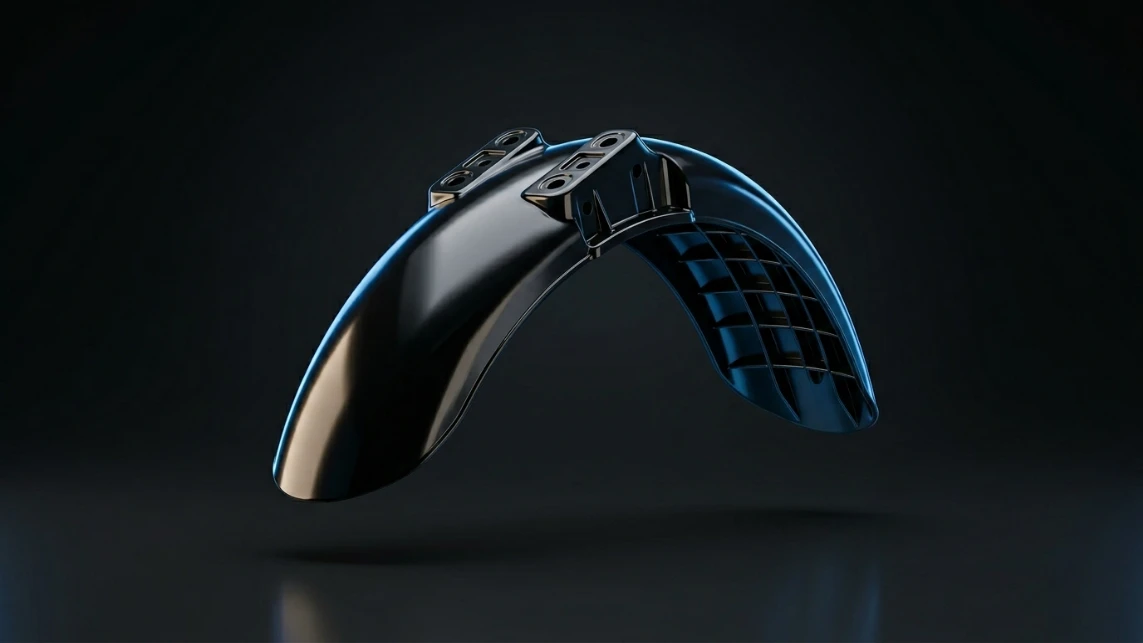
The short answer
Pakistan assembles motorcycles in enormous numbers, overwhelmingly in the 70cc to 125cc range, and a large share of every bike's visible surface is injection-moulded plastic. Mudguards, side covers, chain covers, tool boxes, headlight housings, indicator lenses, handle covers and number plate holders are all moulded parts.
Two requirements dominate everything else. UV stability, because a part that survives a lab test will still chalk, fade and crack after two summers in direct Pakistani sun. And colour, because a side cover that does not match the painted tank makes an otherwise good bike look wrong on the showroom floor.
The third, specific to this category, is size. A rear mudguard is a large part. Large parts need large tonnage, and large tonnage is where tooling and moulding cost climb steeply.
Which parts are injection moulded
Mudguards, front and rear. The largest moulded parts on most bikes. They take road impact, stone strike and constant vibration, and they flex in use — so the material has to bend without cracking, not just resist a single blow.
Side covers and panels. Cosmetic, colour-matched to the tank, usually clipped on. Surface finish matters more here than strength.
Chain cover. Functional, exposed to oil, grit and heat. Needs chemical resistance and stiffness to avoid rubbing the chain.
Tool box and battery box. Hidden, structural, and a legitimate place to save money with a cheaper grade and regrind content.
Headlight housing and indicator lenses. The housing is usually ABS; the lenses are clear or amber and need a transparent material that does not haze or yellow.
Handle covers, switch housings, levers and grips. Small parts, high volume, often family-moulded together.
Number plate holder and mudflap. Simple, and frequently the first part to fail because it is the part nobody specified properly.
Materials: what goes where and why
Polypropylene for mudguards. PP flexes without cracking, absorbs impact, resists chemicals and costs little. A mudguard needs to deform and spring back when a stone hits it or a foot catches it. Often specified as an impact-modified or copolymer grade, because homopolymer PP goes brittle in cold weather.
ABS for cosmetic covers and housings. Better surface finish than PP, takes colour and texture beautifully, stiffer. The catch is that ABS is poor in UV on its own — it chalks and yellows outdoors. It is the right choice only with a UV-stabilised grade, or with a painted or coated finish.
ASA instead of ABS where UV matters most. ASA is essentially ABS with far better weathering. It costs more and is less commonly stocked locally, but for an unpainted coloured part that lives in the sun it is the technically correct answer.
Polycarbonate or PMMA for lenses. PC for impact resistance where a lens might take a knock; PMMA for better clarity and scratch resistance at lower cost. Both need proper drying before moulding — skip it and you get streaks and silver marks that no amount of polishing fixes.
Nylon for levers and load-bearing brackets, where stiffness and fatigue resistance matter more than looks.
UV degradation: the failure that defines this market
This is the biggest difference between a part specified for Pakistan and a part specified off a European datasheet. Sustained intense sun does three things to an unprotected moulded part.
Chalking. The surface degrades into a powdery layer. A black mudguard turns grey and matt, and wiping it leaves residue on the cloth.
Fading. Pigments break down. Reds and blues go first; black holds up best, which is one reason so much of the local market is black.
Embrittlement. Polymer chains break down near the surface and the part loses its ability to flex. A mudguard that absorbed impacts happily in year one cracks on the same impact in year three. This is the failure that actually strands people.
What prevents it: a UV-stabilised grade with a real additive package, adequate carbon black in black parts (genuinely one of the best UV protectants available), and virgin material on the outer surface. Regrind concentrates already-degraded polymer, so a part moulded from heavily reground material starts life partway through its own ageing.
Ask what UV package the grade carries and whether it is validated for outdoor use. A supplier who cannot answer is quoting a commodity grade, and your part will show it in the second summer.
Colour matching, and why it is harder than it looks
A moulded side cover has to sit next to a painted steel tank and read as the same colour. Two completely different processes producing one apparent shade.
Moulded colour and painted colour age differently. They may match on day one and diverge within a year as the plastic fades at a different rate to the paint. Matching under showroom light is not the same as matching after a year outdoors.
Texture changes perceived colour. The same masterbatch looks different on a gloss surface and a grained one, because finish changes how light scatters. Approve colour on a sample with the final texture, never on a flat plaque.
Masterbatch batches drift. Agree a colour tolerance in writing and keep a signed physical reference sample at both ends. That one step prevents most colour disputes.
The practical route many assemblers take is to paint the plastic covers too, using the same paint as the tank. It costs more and adds an operation, but it removes the matching problem entirely.
Tooling: why large parts cost what they do
A rear mudguard has a large projected area, and clamping force scales with projected area. A part that would mould happily on a small press may need several hundred tonnes purely because of its footprint — which makes both the tool and the machine time expensive.
Warpage is the main technical battle on large flat parts. A mudguard is big, relatively thin and curved, and it wants to distort as it cools. Fighting that takes balanced cooling in the tool, a sensible gate position, and an ejection system that does not push the part out of shape. It is why the first trial on a large tool rarely produces a perfect part.
Budget for tool modification, not just tool build. Large cosmetic parts almost always need a correction after first samples — a gate moved, cooling rebalanced, a rib added. A moulder with an in-house tool room handles that in days; one who subcontracts tooling turns it into weeks.
Small parts subsidise large ones. Handle covers, levers and switch parts are cheap to tool and run fast, and that mix is what makes large-part work viable. Our machines and capacity page lists the tonnage range we run.
OEM versus aftermarket
OEM work means supplying an assembler: higher volumes, fixed schedules, tighter documentation, real pressure on price. Colour consistency matters enormously because parts are fitted to new bikes side by side.
Aftermarket means replacement parts through the trade: smaller batches, more variety, more forgiving on exact shade, better margins — but more part numbers, so more tools and more changeovers.
The two need different things from a supplier. OEM rewards consistency and schedule reliability; aftermarket rewards flexibility and a willingness to run small quantities. Decide which you are before choosing a moulder, because a plant optimised for one is usually mediocre at the other.
Either way, own your tooling in writing — who owns the mould, where it is stored, what happens if you move. Our guide to switching moulding supplier covers what goes wrong when that is left vague.
Bottom line
Motorcycle plastics look like simple mouldings and are not. The parts are large, visible, colour-critical and they live outdoors in some of the harshest sun anywhere. Specify a UV-stabilised grade, agree colour tolerance against a textured sample, budget for tool correction on the big parts, and keep virgin material on anything on the outside.
Get those right and moulded motorcycle parts are a genuinely good product to make in Pakistan — the volumes are there, the industry is local, and import substitution keeps pushing more of it onshore.
We mould motorcycle mudguards and related components in Gujranwala. Send us a sample or drawing and we will quote it with the material grade and UV package stated.
Frequently asked questions
Which plastic is used for motorcycle mudguards?
Polypropylene, usually an impact-modified or copolymer grade. A mudguard has to flex and spring back when a stone strikes it or a foot catches it, and PP does that without cracking while resisting road chemicals and costing little. Homopolymer PP is avoided because it turns brittle in cold weather. Cosmetic covers are more often ABS or ASA, which give a better surface finish.
Why do motorcycle plastic parts fade and crack in Pakistan?
Sustained intense UV does three things: it chalks the surface into a powdery layer, it breaks down pigments so colours fade, and it embrittles the polymer near the surface so a part that once flexed on impact begins to crack instead. The fixes are a UV-stabilised grade with a proper additive package, adequate carbon black in black parts, and virgin material on the outer surface rather than heavy regrind.
Is ABS or ASA better for motorcycle covers?
ASA, if the part is coloured and unpainted and lives in the sun. ASA is essentially ABS with substantially better weathering resistance, so it holds colour and surface far longer outdoors. ABS is cheaper and more widely stocked and is fine where the part will be painted or coated, or where a good UV-stabilised ABS grade is specified. Plain unstabilised ABS outdoors will chalk and yellow.
How do you colour-match moulded covers to a painted tank?
Approve the colour on a sample with the final surface texture, never a flat plaque, because texture changes how light scatters and therefore how the colour reads. Agree a batch-to-batch tolerance in writing and keep a signed physical reference at both ends. Be aware that moulded colour and paint age at different rates, so a day-one match can drift within a year — which is why many assemblers simply paint the plastic covers with the same paint as the tank.
Why is tooling for a mudguard expensive?
Because clamping force scales with the projected area of the part, so a large mudguard needs a much bigger press than its wall thickness alone would suggest — which raises both tool cost and machine rate. Large, thin, curved parts also fight warpage as they cool, so the tool needs balanced cooling, a well-chosen gate position and an ejection system that will not distort the part. Expect to budget for a tool correction after first samples.
Can one supplier handle both OEM and aftermarket motorcycle parts?
Some can, but the two demand different things. OEM work rewards consistency, tight colour control and schedule reliability at high volume. Aftermarket rewards flexibility, many part numbers and a willingness to run smaller batches. A plant set up for one is often mediocre at the other, so be clear which you need and ask what the supplier currently runs that resembles your mix.
What we do at Rehman Industry
Need a quote for your part?
Send us your drawing, sample or just a description. We'll reply within a business day with real numbers.


