Rehman
The short answer
Pakistan is an emerging alternative to China for injection-moulded plastic parts — particularly for buyers in the Middle East, Central Asia, Africa and Europe looking to diversify their supply chains. Pakistani moulders offer 40–60% lower tooling cost than China, competitive per-part pricing, a deep tradition of metalworking and mould-making (especially in Gujranwala), and the logistical advantage of being positioned between the Gulf and South Asian markets.
This guide covers what Pakistan makes well, what it doesn't, how to find and vet a supplier, typical pricing, quality expectations, logistics, payment terms, IP protection, and how to set up a working relationship from abroad.
What Pakistan moulds well — and what it doesn't (yet)
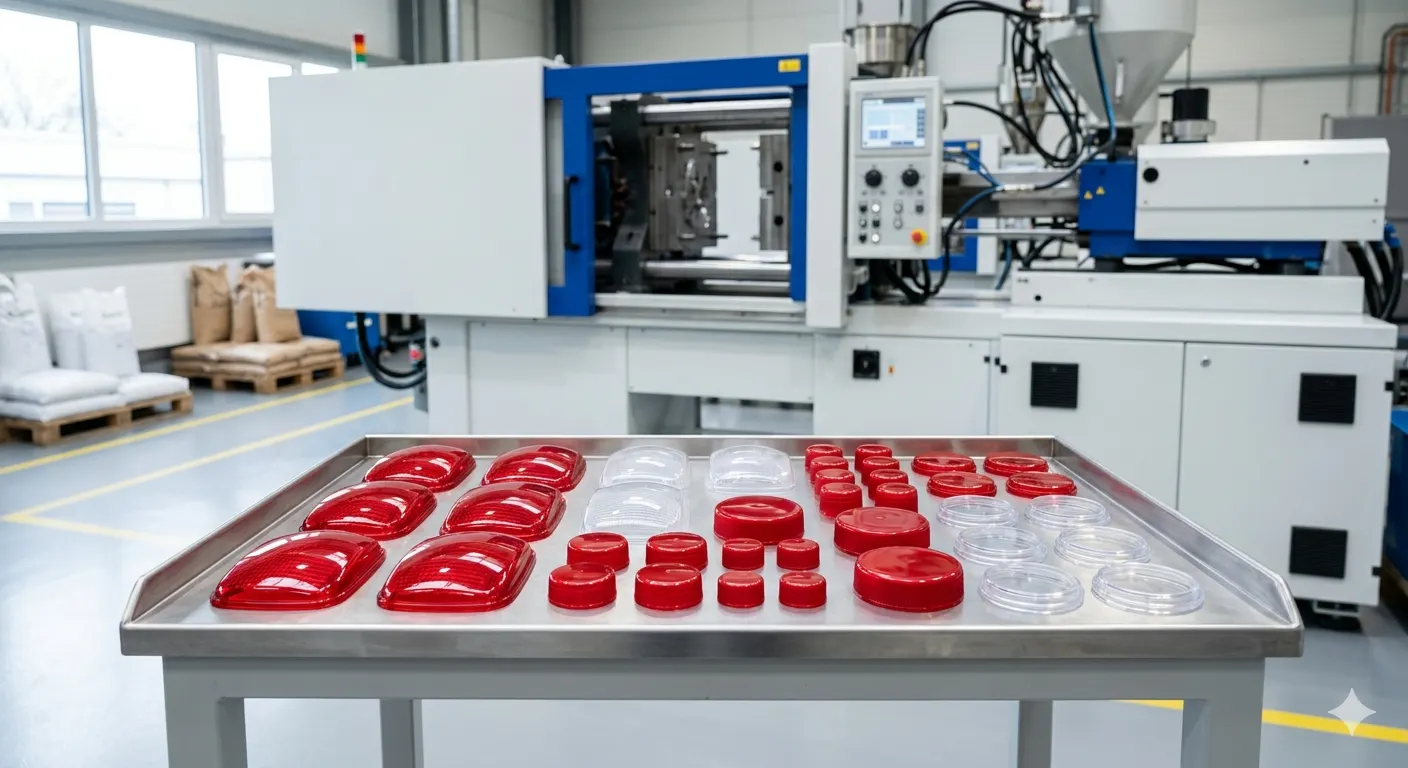
Strong. Automotive plastic parts (lamp covers, mudguards, trim, clips). Household products (jugs, cups, thermos bodies, containers). FMCG packaging (caps, lids, closures — high-volume, multi-cavity). Agricultural products (poultry slat mats, crates). Appliance housings (air-cooler bodies, fan components). Electrical enclosures and switch housings. General contract moulding in PP, ABS, HDPE, PS, Nylon, PC.
Growing. Precision medical components. Technical automotive under-hood parts. Glass-filled Nylon structural parts. Multi-material (two-shot) moulding. Insert moulding.
Not yet. Liquid silicone rubber (LSR) moulding. High-volume precision optics. Micro-moulding (<1 gram parts). Cleanroom medical moulding to ISO 13485. These capabilities exist in China and Southeast Asia but are not yet widely available in Pakistan.
Why Pakistan — the case for diversification
Cost. Pakistani tooling is 40–60% cheaper than Chinese tooling for equivalent complexity. Per-part cost is competitive for runs up to ~500,000/year. Labour cost is among the lowest in Asia for skilled mould-making and press operation.
Supply-chain diversification. Post-2020 global supply-chain disruptions exposed the risk of single-country sourcing. Pakistan offers a genuine 'China + 1' option for plastic parts — different country, different port, different geopolitical risk profile.
Geography. Pakistan sits on the Arabian Sea with direct shipping routes to the Gulf (3–5 days), East Africa (5–7 days), and Europe (14–20 days via Suez). For Middle Eastern and African buyers, Pakistani lead times can be shorter than Chinese.
English-speaking. Pakistani business communication is overwhelmingly in English. Technical specifications, email correspondence and factory-floor signage are in English. This removes the translation friction that Chinese sourcing often involves.
Timezone. Pakistan Standard Time (UTC+5) overlaps comfortably with Middle Eastern, European and African business hours — real-time communication is possible without midnight calls.
How to find a Pakistani plastic parts supplier
B2B platforms. TradeKey (Pakistani origin), Alibaba (many Pakistani sellers have listings), IndiaMART (covers Pakistan in some categories), ExportBureau.
Direct search. Google 'plastic injection moulding Pakistan' or 'plastic manufacturer Gujranwala.' The fact that you're reading this article suggests it's working — we (Rehman Industry) are a Gujranwala-based injection moulder who has been doing this since 2006.
Trade shows. TEXPO (Karachi), Pakistan International Industrial Expo, Gujranwala Chamber of Commerce events.
Trade offices. Pakistani embassies and trade commissions maintain supplier directories. The Trade Development Authority of Pakistan (TDAP) can facilitate introductions.
Referrals. Ask other buyers in your industry who source from South Asia. Word of mouth is still the most reliable channel for finding Pakistani manufacturers.
How to vet a supplier before placing an order
Factory visit. Non-negotiable for a first order. Visit the factory (or send a local agent). Walk the floor. See the machines running. Ask to see moulds they've built. Check cleanliness, machine maintenance, raw-material storage. If they won't let you visit, move on.
Video call as second-best. If you can't visit in person, a live video tour (WhatsApp video, Zoom) is a reasonable substitute for a first assessment. Ask them to walk the production floor, show the tool room, and hold up sample parts.
Sample order. Before committing to production tooling, ask for sample parts from an existing mould (even if it's for a different customer's part). This tells you about surface finish quality, dimensional consistency, and their packaging/shipping capability.
References. Ask for 2–3 current export customers you can contact. A supplier who can't provide references is either too new or hiding something.
Business registration. Verify they're registered with the Federal Board of Revenue (FBR) and have an NTN (National Tax Number). This is the basic threshold of legitimacy in Pakistani business.
Pricing — what to expect
Tooling (one-time). Simple single-cavity moulds: $400–800. Medium multi-cavity: $1,500–3,000. Complex precision moulds: $3,000–8,000. Compare this to Chinese equivalents at roughly 1.8–2.5× these prices.
Per-part cost. Highly dependent on part weight, material, cavity count and volume. Small caps/closures: $0.01–0.03 each. Medium parts (jugs, housings): $0.10–0.40 each. Large housings: $0.50–2.00+ each.
Quoting format. Pakistani moulders typically quote: tooling cost (one-time, usually 50% advance), per-part cost at 2–3 volume tiers, estimated lead time for tooling + sampling, and material grade and source.
Currency. Most export quotes are in USD. Payment is typically via bank transfer (TT) or LC (letter of credit) for first orders.
Quality control for export orders
Pre-production approval. T1/T2 sample parts should be shipped to you (or inspected locally by an agent) before production starts. Check dimensions against your drawing, surface finish, colour match, and functional fit.
In-production QC. For export orders, specify your QC requirements up front: dimensional checks per lot, weight checks, visual inspection criteria, and AQL (acceptable quality level) for defects. Good Pakistani moulders will run these checks without being asked; specify them anyway.
Third-party inspection. For first orders or high-value shipments, consider a third-party pre-shipment inspection (SGS, Bureau Veritas, TÜV — all have offices in Pakistan). Cost is $200–500 per inspection visit.
Material certificates. For regulated applications (food-contact, electrical, automotive), ask for raw-material certificates of compliance (CoC) from the resin supplier. Good Pakistani moulders keep these on file.
Logistics — getting parts from Pakistan to you
Sea freight. Pakistan's main export port is Karachi (Port Qasim). Transit times: Gulf (3–5 days), East Africa (5–7 days), Europe (14–20 days via Suez), Southeast Asia (7–12 days), East Africa (5–7 days). FCL (full container load) and LCL (less-than-container-load) are both available.
Air freight. For urgent or sample shipments, Lahore and Karachi airports have daily cargo connections to the Gulf, Europe and beyond. Air freight is 4–6× the cost of sea but arrives in 2–3 days.
Packaging. Specify packaging requirements in your PO: carton type, pallet or no pallet, moisture barrier, labelling. Pakistani moulders are accustomed to export packing but will default to domestic standards unless you specify otherwise.
Incoterms. Most Pakistani suppliers quote FOB Karachi (they handle everything to port; you arrange sea freight) or EXW (ex-works — you handle everything from the factory gate). CIF is also common for Gulf buyers.
Documentation. Standard export documents: commercial invoice, packing list, bill of lading, certificate of origin (for preferential tariff zones), and any product-specific certificates you need. Good moulders handle this routinely.
Intellectual property and confidentiality
IP protection is a legitimate concern when sourcing from any developing country. Practical steps:
Sign an NDA before sharing drawings. Most Pakistani moulders will sign without hesitation — contract work runs on confidentiality by default. At Rehman Industry, NDAs are signed by default on every export job.
Own the tooling. Ensure your purchase agreement states that you own the mould, even though it's stored at the supplier's factory. This prevents the supplier from running 'extra' parts after your order is complete.
Register your design. If you have a registered design or patent, file it in Pakistan (through the Intellectual Property Organization of Pakistan — IPO). Enforcement is imperfect, but registration is cheap and provides legal standing.
Start with non-core parts. If you're testing a new Pakistani supplier for the first time, start with a generic or non-proprietary part rather than your crown-jewel product. Build trust incrementally.
Communication and relationship management
Language. English is the default for business in Pakistan. Email, WhatsApp and phone calls in English work fine. Technical vocabulary (mould, cavity, gate, runner, shrinkage) is universally understood by Pakistani moulders.
Responsiveness. WhatsApp is the fastest channel — most Pakistani manufacturers respond within hours, not days. Email works for formal communication; WhatsApp for quick questions and photo exchanges.
Working hours. Pakistan works Sunday through Thursday (many manufacturers run Saturday too). Friday is the weekly holiday. Factory hours are typically long — many run 24/7 (Rehman Industry closes only on Friday — reach us any time).
Relationship. Pakistani business is relationship-driven. A factory visit + a cup of chai goes further than a 20-page supplier qualification questionnaire. Invest in the relationship early and it pays dividends in priority, flexibility and honesty for years.
Red flags to watch for
No factory to visit (or excuses about why you can't). Quoting without seeing your part drawing — they're guessing. Significantly cheaper than competitors (40%+ below market) — usually means low-grade steel, thin mould walls, or skipped QC. No business registration / NTN. No export experience — first-time exporters may struggle with documentation, packaging and customs. Reluctance to sign an NDA — rare, but a deal-breaker if it happens.
Bottom line
Pakistan is a viable, cost-effective and increasingly capable source for injection-moulded plastic parts — especially for buyers in the Middle East, Africa and Europe looking to diversify away from China-only supply chains. The key is vetting the supplier properly (factory visit, samples, references), specifying quality requirements clearly, and investing in the relationship.
Rehman Industry has been injection-moulding plastic parts in Gujranwala since 2006. We welcome export enquiries — send us your part drawing, target material and estimated volume, and we'll quote within a business day. NDAs signed by default. Factory visits welcome.
What we do at Rehman Industry
Need a quote for your part?
Send us your drawing, sample or just a description. We'll reply within a business day with real numbers.